How Nigerian Musicians Can Prepare a YouTube Official Artist Channel Request
A Nigerian musician can prepare a YouTube Official Artist Channel request by checking the eligibility rules first, making the artist channel and release catalogue consistent, and sending the request through a label, distributor or eligible Music Service Partner. You do not request this status from Cloutingo, and the badge is not a shortcut to views. It is a YouTube channel type for an eligible artist or band.
Preparation matters because YouTube expects one music-focused channel for the artist, at least one official release delivered by a distributor or label, policy compliance, and a qualifying partner connection. A tidy request file helps the partner identify the right artist, channel and releases without guessing.
Understand what an Official Artist Channel changes
An Official Artist Channel, often shortened to OAC, brings an artist's music presence together on one channel. YouTube says it can consolidate subscribers from the artist's topic channel, Vevo channel where applicable, and existing artist channel. It can also provide artist-focused features such as Insights for Artists.
This does not mean every musician with a YouTube account is eligible. It also does not certify that every upload is original, remove copyright responsibilities or guarantee that a release will be recommended. Read YouTube's current Official Artist Channel eligibility guide before asking a partner to submit a request.
Pass the eligibility gate before preparing paperwork
Check the rules in order. If an essential condition is missing, solve that issue before chasing a request.
- One artist or band: the channel should represent one act, not a mixed upload page for several unrelated artists.
- Music is the main purpose: the channel should be focused on that act's music and related artist content.
- An official release exists: YouTube requires at least one official music release delivered to YouTube by a music distributor or label.
- The channel follows YouTube policies: active problems involving Community Guidelines, terms or copyright can affect eligibility.
- A qualifying relationship exists: at least one additional route must apply, such as YouTube Partner Program participation, a YouTube Partner Manager relationship, an eligible label network or distribution through a listed music partner.
YouTube also recommends having at least one public video on the artist channel in addition to the official release. A channel with no public uploads may be rejected or require more verification. That recommendation is different from buying a view count or uploading unrelated filler. Publish something that genuinely represents the artist.
Build a request file your partner can verify
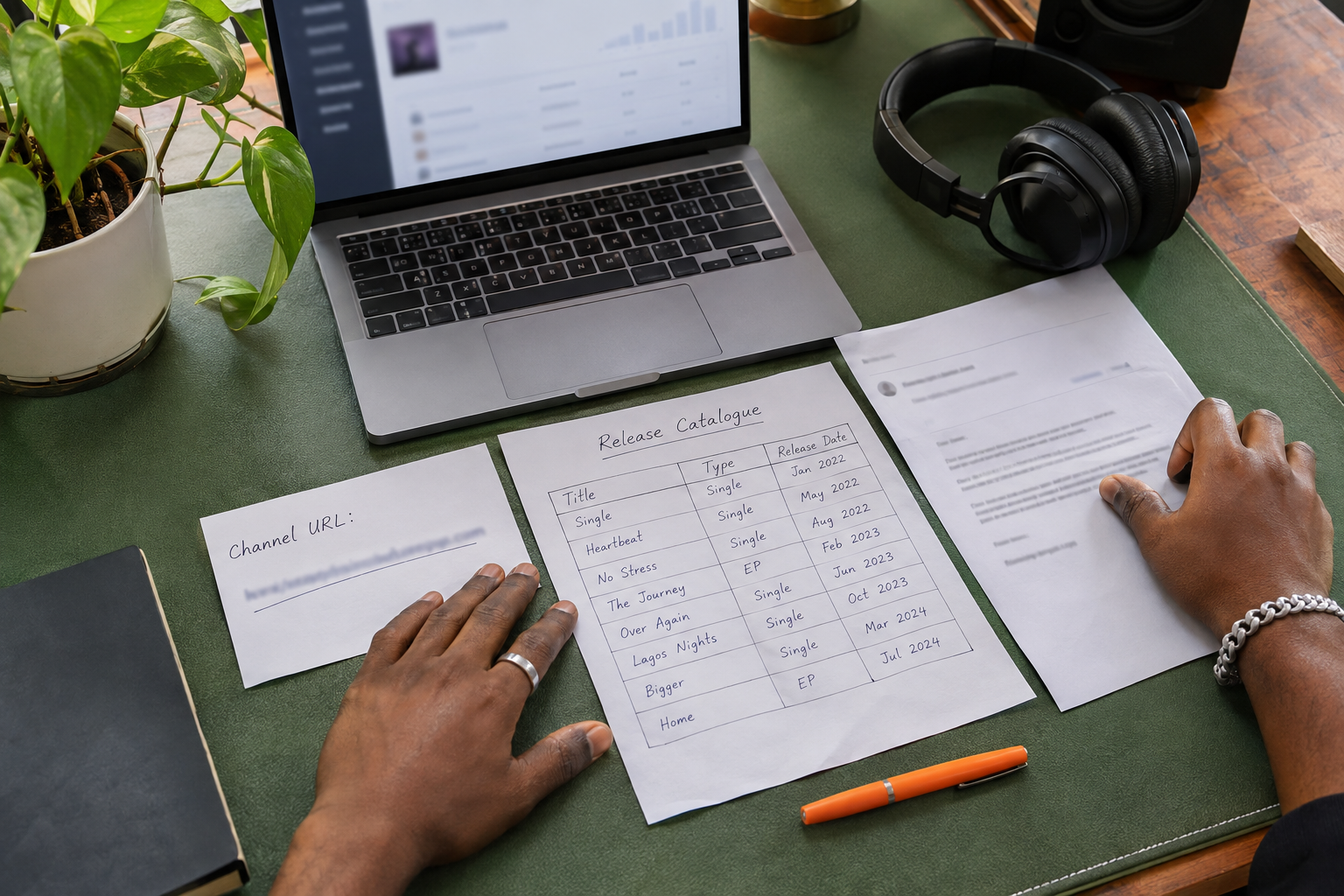
Your distributor or label may use its own form. Prepare the underlying details first so you can answer accurately:
- The artist or band name exactly as it appears on the latest official release
- The full URL of the artist-owned YouTube channel
- The channel ID, if the partner asks for it
- Links to the official release or topic-channel catalogue on YouTube
- The distributor or label account through which the release was delivered
- A business email the submitting partner already associates with the artist or authorised representative
- Links to the artist's official website or established profiles where they help confirm identity
Do not send passwords, one-time codes or recovery details. A legitimate request should identify the channel and rights relationship without asking you to surrender the account. Keep a dated copy of the information you supplied and the partner that received it.
Make the artist identity consistent
Small naming differences can create avoidable ambiguity. Compare the channel name, release artist name, distributor dashboard, artwork credit and official website. Decide which spelling and capitalisation are authoritative. A stage name written three different ways may look like three different acts.
YouTube's guidance for artist channels recommends using the official artist or band name and avoiding unnecessary additions such as “Official”, “TV”, “Channel” or “Productions”. The goal is not to stuff the name with keywords. It is to help a listener recognise the same act across releases and channel pages.
If another artist uses a similar name, collect evidence that distinguishes your act, such as your distributor-linked catalogue, official site and consistent artwork credits. Do not rename yourself impulsively just to make the request appear simpler. A legal or commercial name change can affect distribution records and should be coordinated with the organisations that manage those records.
Review the channel and catalogue together
Open the artist channel and the YouTube release pages side by side. Check that the request points to the intended channel, not a fan page, an old personal account or a label's general channel. Confirm that the official releases belong to the same act and that obvious duplicate pages are noted for the submitting partner.
 Do not attempt to merge or delete channels on your own because they look untidy. YouTube controls the OAC process, including the way eligible channel content and subscribers are brought together. Explain the situation to the label, distributor or Music Service Partner and let the authorised route handle the request.
Send the request through the correct route
YouTube directs artists to contact their label or distributor. Independent artists without either can approach a Music Service Partner listed in the YouTube Services Directory. The partner requests the OAC on the artist's behalf. Cloutingo cannot grant the status or speed up YouTube's review.
Ask the submitting partner what information it needs, whether there is a fee in its own agreement, and how it will communicate the result. Do not invent a deadline for a release campaign. Review time can vary, and an incomplete or conflicting request may require more checks.
Prepare the channel for listeners, not only approval
An OAC request is administrative. The channel still needs accurate artist presentation and worthwhile content. Use a recognisable profile image, current description, working links and a clear release catalogue. If you are also preparing profiles on streaming platforms, our guide to a Spotify artist profile before promotion can help you coordinate the public-facing details without treating the platforms as identical.
When the channel and release are ready, choose promotion based on a specific piece of content and a realistic objective. Review the services currently listed by Cloutingo, then read the service description and Cloutingo's terms. Services differ in audience, link type, delivery and conditions. Purchased views, likes or subscribers are not proof of organic fandom, sales or YouTube approval.
Use a final submission check
- The channel belongs to one artist or band and is focused on that act's music.
- At least one official release was delivered to YouTube by a label or distributor.
- The artist name is consistent across the channel, release and partner records.
- The channel URL and release links open the exact pages you intend.
- The submitting label, distributor or Music Service Partner is authorised to act.
- No password, recovery code or private login detail is included.
- The request does not claim that an OAC will guarantee discovery or performance.
If every item is clear, send the request through the authorised partner and keep the evidence file. After approval, review the consolidated channel before promoting a release. If a current Cloutingo service fits that release and its correct link type, you can create a Cloutingo account and make a considered selection.