
How South African YouTubers Can Use Upload Checks Before Publishing
YouTube's Checks page can screen an uploaded video for copyright claims and, for eligible monetising channels, ad-suitability issues before the video becomes public. A South African creator should use that time to verify the source of every important asset, wait for the available checks to finish and choose a response based on the rights actually held.
A completed check is not a legal clearance certificate. YouTube says its Content ID system scans uploads against reference files supplied by copyright owners. A video can still face a later claim or removal request, and legal rights depend on the material and applicable law.
Build a rights inventory first
Before uploading, list the important elements in the video:
- original camera footage;
- guest or contributor recordings;
- music and sound effects;
- photographs, graphics and archive clips;
- screenshots, presentations or third-party demonstrations.
For each item, record whether you created it, received written permission, bought a licence or are relying on a legal exception. Keep the source file, agreement, invoice or permission message. “I found it online” is not a rights category.
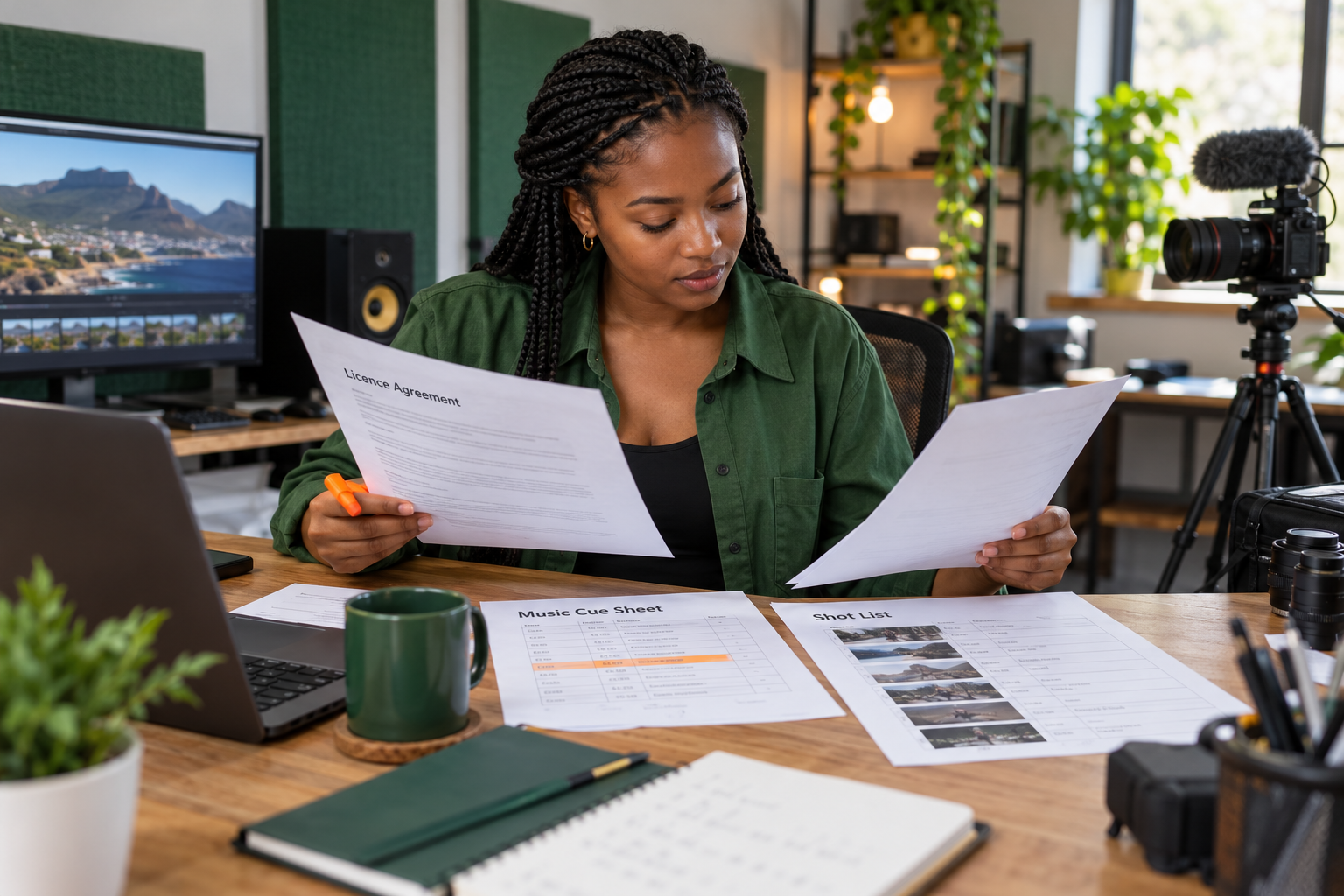
This is practical production management, not legal advice. If ownership or an exception is genuinely uncertain, seek qualified advice before treating the video as cleared.
Upload early enough to wait
Do not begin a time-sensitive upload a few minutes before the planned release. YouTube recommends waiting for checks to complete before making a video public. Some channels see results quickly, while certain monetisation reviews can take longer.
During the upload flow, complete the title, description, audience and visibility choices carefully. Use a non-public visibility setting while the team reviews the result. The exact options can depend on the channel and upload workflow.
Read the Checks page
YouTube's current guidance says the Checks page can screen for copyright claims and ad suitability before publication. Ad-suitability information is relevant to channels using YouTube's monetisation tools. A creator outside the YouTube Partner Programme should not assume every monetisation status or self-certification control will appear.
If a checking indicator is still visible, the system has not finished. Waiting reduces the chance of publishing and immediately discovering a restriction that could have been reviewed first.
Understand what a Content ID claim can do
A copyright claim may be generated when an uploaded video matches reference audio or video in YouTube's Content ID system. Depending on the copyright owner's settings, a claim can:
- block the video from being viewed;
- monetise it, sometimes sharing revenue with the uploader; or
- track its viewing statistics.
YouTube notes that these outcomes can differ by country or region. A video may be available in South Africa but blocked or monetised differently elsewhere.
Do not confuse a claim with a takedown
A Content ID claim is different from a copyright removal request and copyright strike. In YouTube Studio, a Restrictions entry labelled as a claim identifies a Content ID issue. A copyright takedown refers to a removal request. The consequences and response process are not the same.
Do not tell a client that every claim is a strike. Do not dismiss a takedown as an ordinary automated match. Open the details, identify the claimant, the matched segment and the stated policy before deciding what to do.
Pay special attention to longer Shorts
YouTube's current copyright guidance says one-to-three-minute Shorts with an active claim are blocked, regardless of the claimant's policy. If you are preparing a Short in that range, allow time to resolve a legitimate issue before the planned release.
Removing the claim does not guarantee the Short will perform or remain free from other policy issues. It only resolves the identified copyright matter when the chosen action succeeds.
Choose the response that matches your rights
If a claim appears, use the evidence you collected. YouTube lists several possible responses:
- Leave it: accept a valid claim and its policy.
- Remove the claimed material: where available, erase a claimed song, trim the matched segment or replace music with a track from the YouTube Audio Library.
- Dispute: use this only when you are confident the claim is invalid and you have the necessary rights or a valid basis.
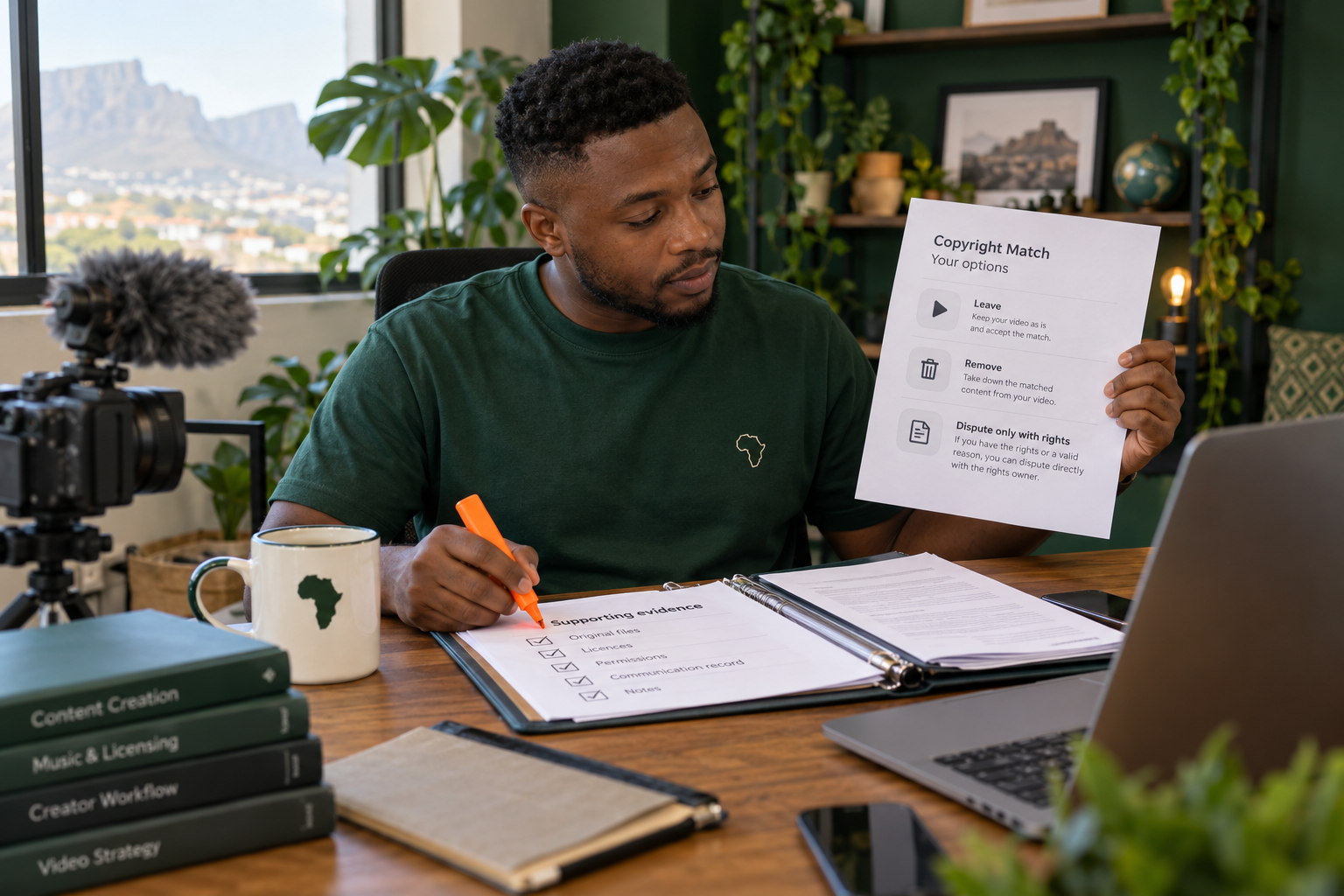
YouTube does not mediate copyright disputes. Its guidance warns that disputing without a valid reason can lead the claimant to request removal. If YouTube receives a valid removal request, the channel can receive a copyright strike.
Use the matched segment to investigate
Open the claim details and note the claimant, the content used and the timestamps. An unfamiliar claimant name does not automatically make the claim false. Music publishing rights may be administered by companies or collecting societies the creator does not recognise.
Compare the claimed segment with the licence. Check territories, platforms, duration, commercial use and whether the licence covers synchronising the music with video. A receipt for a download is not always the same as a licence for the intended use.
Run a final pre-publication review
- All important assets appear in the rights inventory.
- The available Checks have finished or the team has deliberately accepted the remaining review state.
- Any claim has been opened and its exact effect understood.
- The response matches documented rights.
- The release time, description and visibility are still correct.
For an illustrative example, a Cape Town travel channel may own its footage but use a licensed music track. If a match appears, the editor should compare the timestamp with the cue sheet and licence before replacing or disputing anything. The location footage being original does not automatically clear the music.
Clear rights before promotion
Promotion should not begin while the publishing team is uncertain whether the video can remain available. Purchased views cannot resolve a copyright claim, reverse a block or prove ownership. They also do not guarantee watch time, monetisation or recommendations.
After the video is properly published and the campaign goal is clear, review relevant current options on the Cloutingo services page. Read the exact listing and the current terms because service conditions differ. If an option is suitable, use the verified Cloutingo sign-up page. Rights review comes first; distribution decisions come afterwards.