
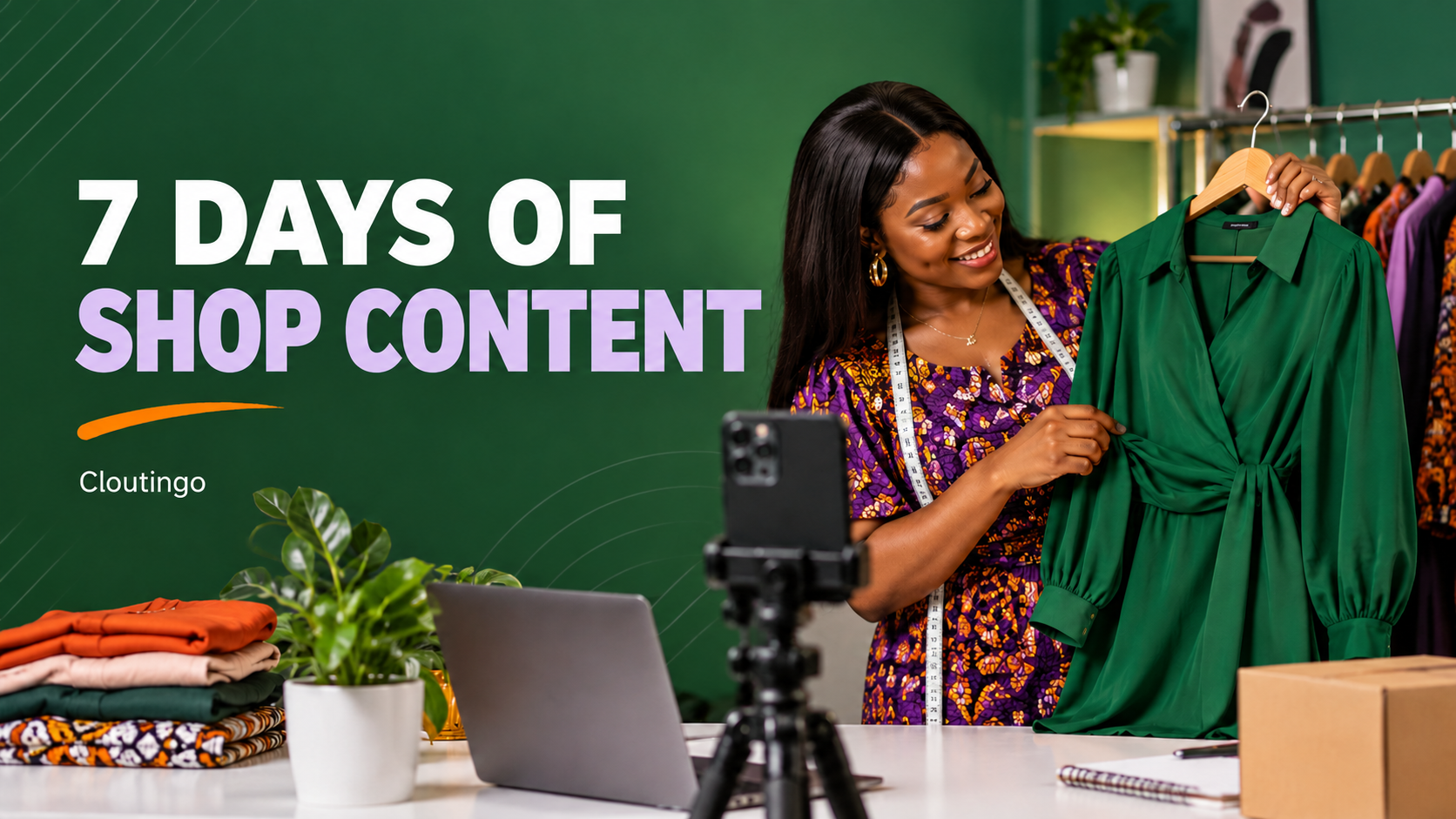
A Seven-Day Content Plan for a Nigerian Online Shop
A useful seven-day content plan for a Nigerian online shop answers seven buying questions: what you sell, how it works, who it suits, what it costs, how delivery works, why the buyer should trust the details and how to order. Build the week around one product or collection so you can create the material in one session.
You do not need seven unrelated ideas or a studio shoot. You need clear product information, a realistic filming plan and one next step for each post. The example below is an editorial planning suggestion, not a promise of reach or sales.
Choose one product and one audience first
Start with an item you can actually supply. Check stock, available options and the information a customer needs before paying. There is little value in producing a strong week of content for an item that is unavailable or poorly described.
For this example, imagine a Nigerian fashion shop selling a workwear set. Its primary audience is someone comparing everyday office outfits. The same planning method can work for another product, but the questions should change with the buyer.
Write one sentence that defines the week's purpose: “Help office workers decide whether this set fits their needs and understand how to order it.” This gives every post a job. It also helps you avoid filling the calendar with unrelated trends.
Prepare a small set of reusable material
Before filming, list the shots that explain the product: the full item, a close view of the fabric, its fit or dimensions, available colours and packaging. Prepare accurate answers to common questions. Use your own material or material you have permission to use.
Film in a clear space with enough light to show the product honestly. Keep colours as close to the real item as you can. A heavily edited photo may look attractive while making it harder for the buyer to judge what will arrive.
You can reuse footage without repeating the same message. A fabric close-up can support a demonstration, comparison or care explanation. Change the question the post answers and the supporting caption.

A practical seven-day plan
Day 1: Introduce the product clearly
Show the whole item and explain its main use. Name what is included and who may find it useful. Avoid a caption that only says “new arrival” when the viewer still cannot tell what you are selling.
For the workwear example, show the top and trousers together and describe the intended occasion. End with one action, such as checking the available sizes. Do not claim a fit or feature you have not checked.
Day 2: Demonstrate one important detail
Choose a question that benefits from being shown. Demonstrate a pocket, closure, lining or fabric texture. For a different product, this could be assembly, cleaning or the way an accessory attaches.
Keep the explanation specific. “Here is the inside seam” gives the buyer something to assess. “Best quality ever” asks them to accept a claim without evidence. A clear demonstration can do more useful work than a string of superlatives.
Day 3: Help the buyer choose
Compare two genuine options within your own range. Explain which measurements, colour preferences or uses might guide the choice. Give the buyer a practical decision rule rather than saying every option suits everyone.
For the workwear set, show the actual size information you use. If a measurement is uncertain, confirm it before posting. Do not guess a size chart or imply that a generated model shows the garment's real fit.
Day 4: Explain the price and what it covers
State the current product price if you are ready to honour it. Make clear whether the displayed amount includes delivery or whether that needs a separate quote. Use naira for a Nigerian offer and check every number before the post goes live.
Any discount or deadline should be real. If there is no promotion, explain the ordinary offer clearly. Customers do not need an invented countdown to understand the value of an item.
Day 5: Show the ordering and delivery process
Explain what a buyer should send, how you confirm availability and when delivery details are agreed. Use your actual process. If delivery varies by destination, say what information you need to give an accurate estimate.
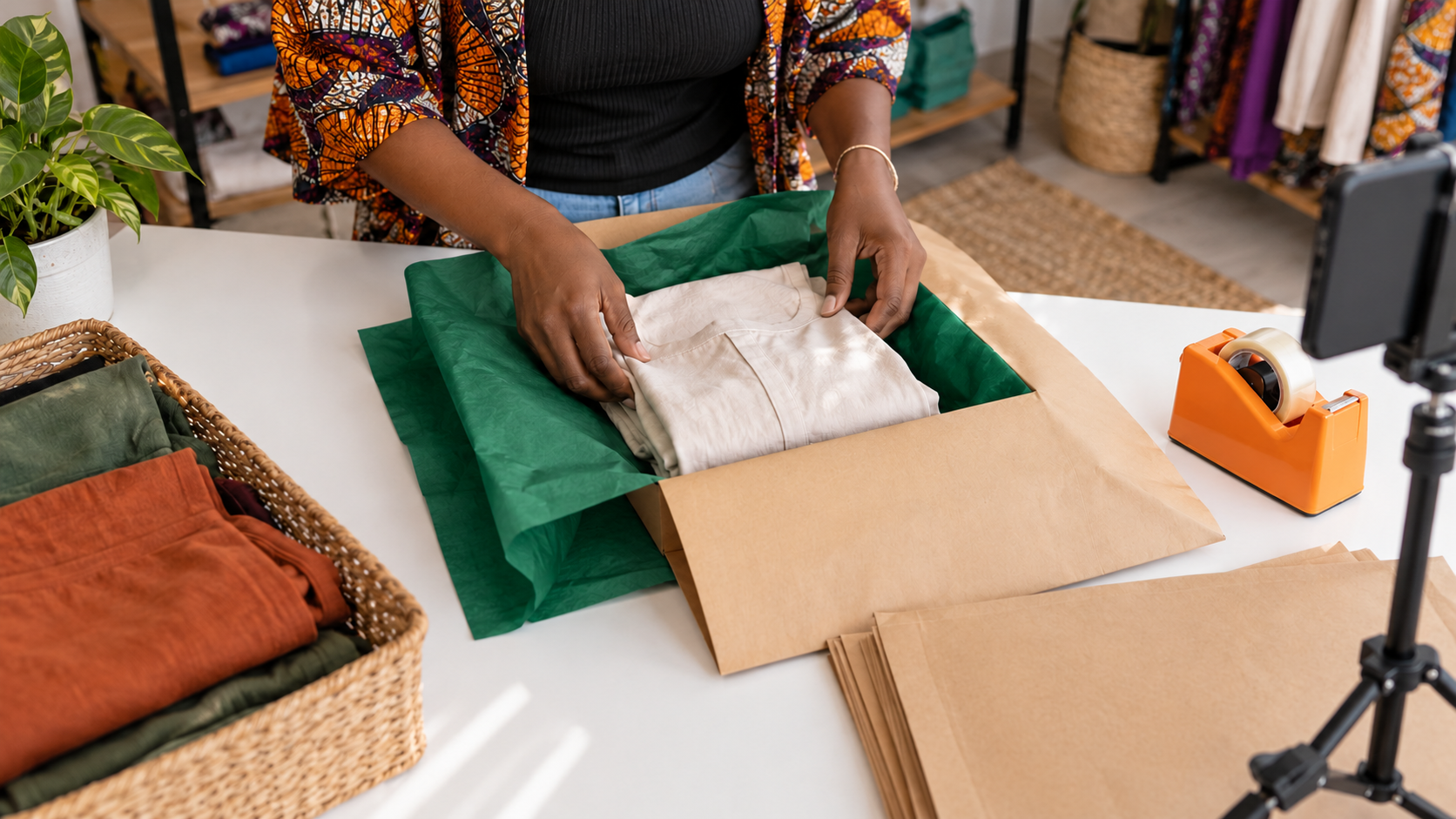
A packing video can make this practical, provided it does not reveal a customer's address, phone number or other private details. Use a demonstration parcel when filming a real order would expose information.
Day 6: Answer a hesitation with evidence
Pick a question buyers actually ask. Can the fabric be seen in daylight? What does the inside look like? How should the item be cared for? Answer with an accurate demonstration or clear explanation.
Use a review only when it is genuine and you have permission to share it. If you do not have one, show the product detail instead. A staged testimonial or invented customer story can mislead the person you want to reassure.
Day 7: Recap and make ordering simple
Bring the key details together: item, options, current availability and the next step. Check stock again before posting. A week-old filming session should not become a week-old stock promise.
Ask for the information that helps you respond, such as the preferred option and delivery destination. Keep the action manageable. Several competing instructions can leave the buyer unsure whether to comment, message or complete a form.
Review enquiries as well as attention
Keep a small weekly note of the posts published, the questions they answered and the enquiries you received. Where possible, ask buyers which post helped them understand the item. Treat this as feedback, not proof that one post caused every purchase.
Separate views and likes from enquiries, confirmed orders and revenue. They describe different things. A post with modest attention may still reveal a useful customer question, while a widely viewed clip may create little buying interest.
Decide on promotion after the content is clear
At Cloutingo, we encourage you to understand what you are ordering before spending. Our service catalogue contains different social media service types. Read the specific audience, method and conditions instead of treating every listing as access to Nigerian buyers.
Purchased engagement is different from organic interest and platform advertising. It does not establish that people want the product, and some methods can conflict with a social network's rules. Review those rules and Cloutingo's terms before making a promotion decision.
Start by choosing one available product and drafting the seven buyer questions above. Publish accurate, useful answers and review what customers still need to know. If a Cloutingo service later fits your goal and its conditions are acceptable, create an account and check the current details before ordering.