

How Nigerian Creators Can Plan an Instagram Collab Post
An Instagram Collab post works best when every co-author agrees on the purpose, audience, creative direction and responsibilities before anyone publishes. Meta’s official Collabs explanation says the initiating account can invite up to three collaborators to a feed post, carousel or reel. Once an invitation is accepted, the content can appear on each collaborator’s profile grid and reach their respective audiences. That shared distribution makes preparation more important, not less.
For Nigerian creators, a Collab can suit a joint tutorial, event announcement, product demonstration or creative project. It is not simply a way to borrow another account’s audience. The post should give each community a clear reason to care.
Begin with one shared outcome
Write a single sentence explaining what the collaboration should achieve for the viewer. “We want more reach” is too vague. “We will show new photographers how to create a simple portrait setup with two household lights” gives both creators a defined job.
The outcome should determine the format. A carousel may suit a sequence of steps. A reel may be better for a demonstration with movement. A single feed image can work for an announcement when the details are simple. Choose the format for the idea rather than forcing a concept into whichever format one collaborator normally uses.
Check whether the partner fits the idea
A large follower count does not establish a useful partnership. Review the prospective collaborator’s subject, usual tone, audience expectations and recent work. Look for a credible connection between what they publish and what you plan to make together.
For example, a food photographer and a small restaurant could create a practical lighting demonstration around one dish. A fashion creator and a financial educator may need a much stronger concept before a joint post makes sense. The question is not whether the accounts are popular. It is whether their audiences can understand the shared value without a long explanation.

Agree on ownership before production
Decide who owns the original photographs, footage, graphics and project files. Record where music, stock material or third-party clips came from and who has permission to use them. A Collab invitation does not transfer copyright or create permission for material that the team did not own.
Also agree on what happens if one account later wants the post changed or removed. The initiating account controls the original publication, so this decision should not be left until a disagreement occurs. A short written agreement can cover the content owner, the accounts being invited, the publication window and the process for corrections.
Create one production brief
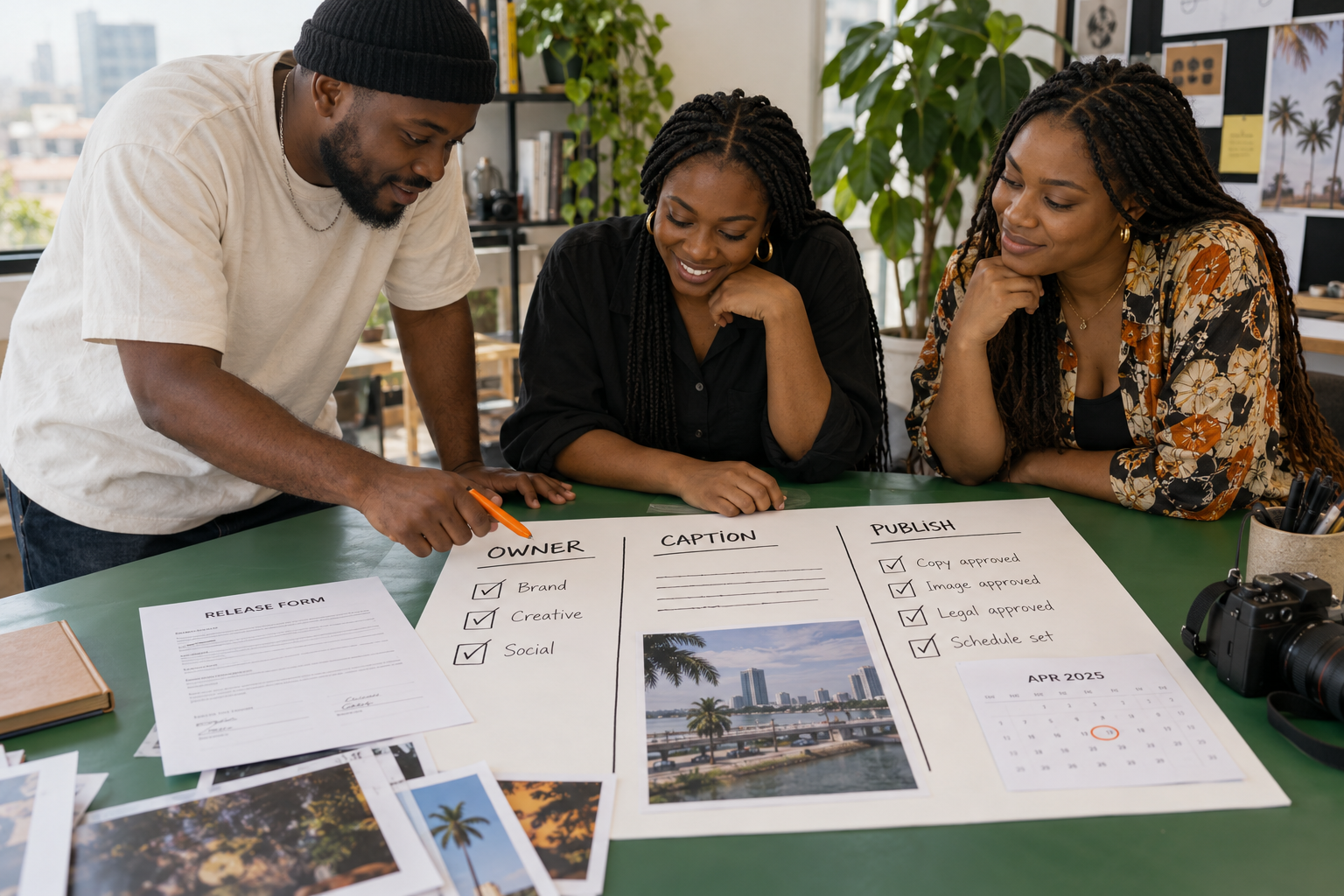
Use a brief that both sides can read before filming or designing. It can be one page, provided it answers the important questions:
- What is the viewer meant to learn, feel or do?
- Which account will create the original post?
- Who supplies each photograph, clip or factual claim?
- Who writes and approves the caption?
- Which names, handles and links must be checked?
- When will the final version be reviewed?
Give one person responsibility for assembling the final version. Shared authorship does not require several conflicting edits. The other collaborators should comment against that same version so the team can see what has been accepted.
Approve the exact post, not a rough idea
Before publication, each collaborator should review the final media, crop, caption, spelling, claims and account handles. Confirm that names are written correctly and that a person shown in the content has given any necessary permission.
If the post is part of a paid or gifted commercial relationship, follow the disclosure rules and use any applicable branded-content controls. A Collab label and a commercial disclosure serve different purposes. Co-authorship tells viewers which accounts share the post; it does not by itself explain a paid relationship.
Send the invitation from the agreed account
Meta says an Instagram account can invite up to three friends to co-author a feed post, carousel or reel. The content appears across the participating profile grids only after collaborators accept. If the initiating account is private, invited collaborators must follow it back.
Use the current Instagram publishing controls because labels and menu positions can change. Select the agreed accounts carefully. A similar display name is not enough; confirm the full handle against the brief. Tell collaborators when the invitation has been sent and ask them to check the post before accepting.
Prepare for an invitation that is not accepted
Set a reasonable response deadline before the planned publication time. A collaborator may be travelling, may no longer approve the final version or may simply miss the notification. Do not announce that a joint post is live until the invitation has actually been accepted.
If someone declines, return to the agreement instead of pressuring them publicly. The initiating account can decide whether the content still makes sense as a normal post, whether a different version is needed or whether publication should be postponed. Remove the other person’s name or contribution if the team no longer has permission to use it.
Divide the work after publication
Decide who will answer factual questions, who will handle enquiries about the offer and who will correct an error if one appears. A creator should not guess another business’s price, availability or fulfilment terms. Direct those questions to the person who owns the information.
Keep a record of the live URL and the final approved files. After the agreed review period, compare the questions and reactions with the original outcome. A large number of views cannot tell you whether viewers understood the lesson or whether the partnership was a good fit.
Promote only after the shared post is ready
A Collab can extend distribution across participating accounts, but it does not guarantee reach, followers or sales. If the final post is accurate and both collaborators want additional promotion, review the available Cloutingo services for the relevant platform. Read the current terms and the selected service description because audience, delivery and conditions differ.
Use promotion to support a collaboration that already has a clear purpose and approved content. It cannot repair an unsuitable partner choice or supply consent that was never obtained. When the partnership is ready, the initiating account can create a Cloutingo account and assess a suitable option without treating purchased engagement as evidence that the collaboration succeeded.