
How Nigerian Creators Can Use Instagram Trial Reels
Instagram Trial Reels let you show a Reel to non-followers first, then decide whether to share it with your followers. For a Nigerian creator, the feature is most useful when you want to test one new topic, storytelling style or presentation format without immediately placing the Reel on your main profile surfaces.
A Trial Reel is not a guarantee of reach or a shortcut to virality. Treat it as a limited editorial experiment. Choose one question, observe the early response and decide whether the idea deserves a wider release, a revision or no further work.
Check whether the Trial option appears
Meta announced Trial Reels in December 2024 and later said the feature had been made available to everyone. Account eligibility, app versions and interface changes can still affect what you see. Create a Reel through the normal Instagram process and look for the Trial toggle before sharing. If the option is not present, do not label an ordinary Reel as a trial or assume the feature can be forced through another setting.
Meta's official guidance says a Trial Reel is shown to non-followers first. Only you can see that the Reel is a trial. It does not normally appear on your main profile grid or Reels tab, and followers do not receive it in their feed or Reels tab unless you later share it with everyone.
There is an important limitation: a follower may still encounter the Reel elsewhere, such as when someone sends it in a direct message or when it appears on a page connected to the same audio, location or filter. Trial does not mean completely invisible to every follower.
Choose one thing to test
A useful test changes one meaningful element. If you change the topic, editing rhythm, language, presenter and length together, the result cannot tell you which decision mattered. Pick one question such as:
- Can this creator explain a familiar subject with a calmer tutorial format?
- Does a new audience understand a topic outside the creator's usual niche?
- Is a short demonstration clearer than a spoken explanation?
Do not use a Trial Reel for an urgent announcement, a sponsor deliverable that must reach existing followers, or information that depends on a fixed deadline. The feature is better suited to an idea you can assess without harming a campaign if it stays limited.
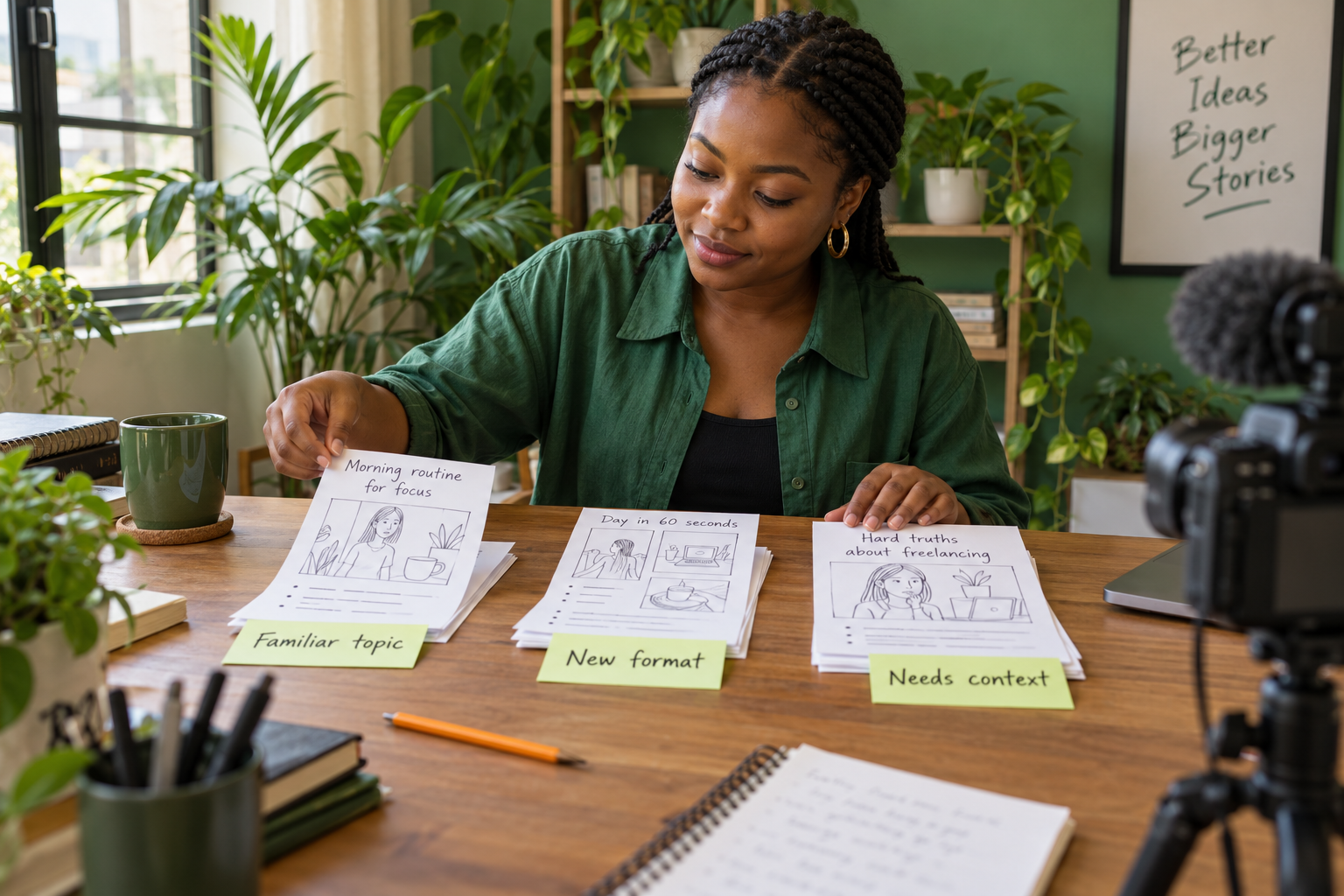
Prepare the Reel as a complete piece
Testing with non-followers is not permission to publish an unfinished draft. A person who does not know you needs more context than a loyal follower. State the topic early, make the visual subject clear and remove references that only regular viewers will understand.
Check captions, names, prices and changing facts before sharing. Use music and footage you are allowed to use. A trial may have limited distribution, but it is still published content and should meet the same accuracy and rights standard as a normal Reel.
Turn on Trial before sharing
- Create the Reel through the normal Instagram workflow.
- Complete the caption, cover and other publishing choices.
- On the final sharing screen, turn on the Trial option if it is available.
- Review the settings once more, then share.
After publishing, Instagram places the Trial Reel alongside your drafts in the area visible to you. Do not panic because it is absent from the public profile grid. That limited placement is part of how the feature works.
Read the first result without overreacting
Meta says key engagement information becomes available approximately 24 hours after sharing a Trial Reel. The listed metrics include views, likes, comments and shares, along with comparisons to previous trials. Those signals can help you judge whether the idea was understood, but they do not identify a permanent formula.
Read the metrics together. Views without comments or shares may mean the opening attracted attention but the idea did not give viewers a reason to respond. A smaller result with specific comments may reveal that the subject is useful to a narrow audience. One trial is a clue, not proof.
Choose share, revise or stop
Make one of three editorial decisions:
- Share: the Reel is clear, accurate and suitable for existing followers.
- Revise: the underlying idea is useful, but the opening, context or demonstration needs work.
- Stop: the idea does not fit the audience, depends on weak evidence or would distract from the creator's main work.

For an illustrative example, a Nigerian food creator known for recipes might trial a short kitchen-equipment explanation. If viewers understand the demonstration and ask useful follow-up questions, the creator can share it with followers and consider a small equipment series. If comments show that the demonstration lacks context, revision is more useful than simply reposting the same edit.
Decide whether to use automatic sharing
Instagram allows creators to share a successful trial manually or enable automatic sharing. Meta says the automatic option can share a Reel with followers when Instagram determines that it performed well based on views during the first 72 hours. You can change the setting.
Manual sharing gives you time to review comments, factual accuracy and campaign timing. Automatic sharing may suit a creator with a stable review process, but it should not replace judgement. A result can look strong while still being unsuitable for a sponsor, current event or sensitive subject.
Keep a small trial record
Record the idea, the one element tested, the date, the main result and the final decision. Avoid a large dashboard. A short record prevents you from repeating the same failed experiment or claiming that two unrelated trials prove a rule.
Use promotion only after the content decision
A Trial Reel helps you make an organic editorial decision. Purchased engagement cannot validate the idea, guarantee distribution or reproduce the trial result. If you later share the Reel publicly and decide that promotion supports a clear goal, review the current options on the Cloutingo services page.
Service audiences, delivery and conditions vary. Read the exact listing and the current Cloutingo terms before ordering. When the public Reel and campaign goal are ready, use the verified Cloutingo sign-up page. The useful sequence is simple: test one idea, make an honest editorial decision, then promote only if promotion fits the published content.